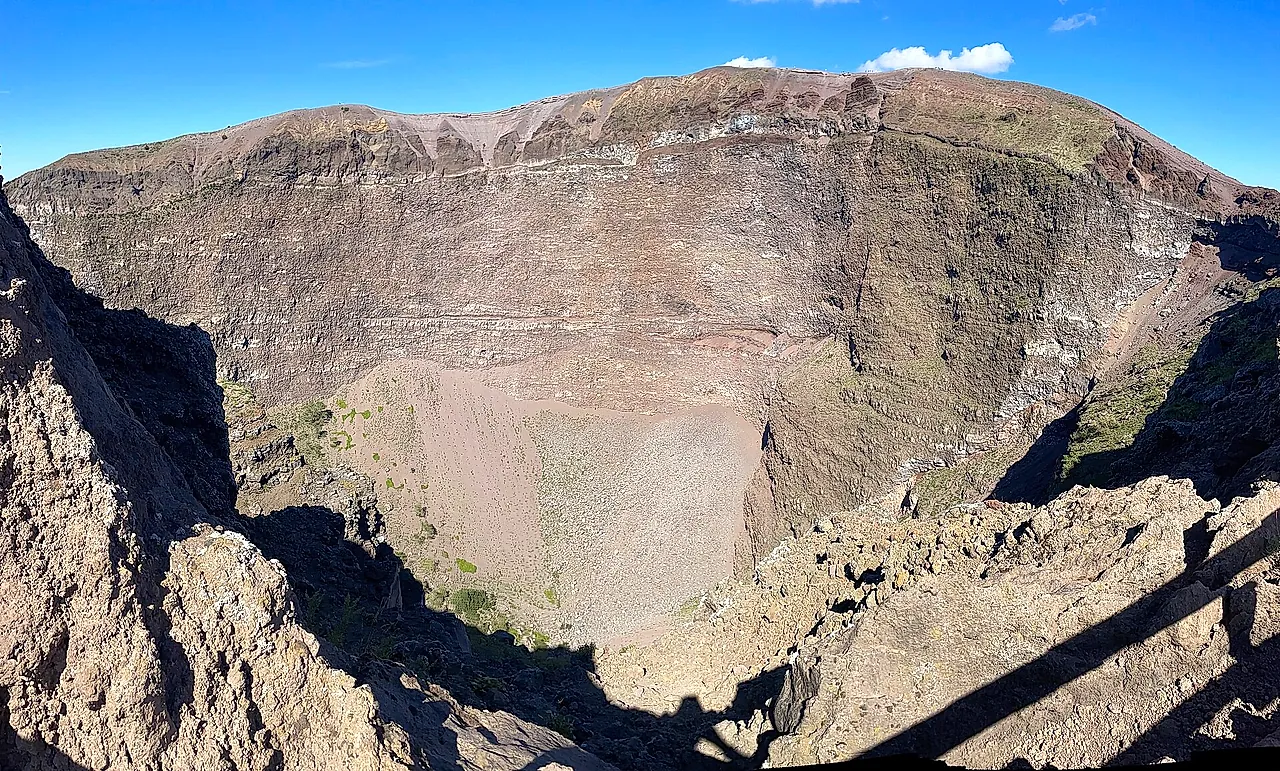
Mount Vesuvius · National Park
Mount Vesuvius: tickets, hours and how to get there
The Gran Cono path from the 1,000 m square: 4,010 m round trip, a time slot for everyone and automatic closure on orange weather-alert days.
Today
Opening hours for every month are on the Opening hours page.
Checked against the official website on 23 October 2026 · Official source
In short
- Entry to path no. 5, the Gran Cono, is by pre-booked ticket only, sold online with a time slot; there is no sale at the path. The Park shows the full ticket as “from 10 €” and the reduced ticket as 8 €, and its notice about sellers gives 11.68 € and 9.55 €; the page does not explain the difference. Children under 6 enter free with an adult and an ID.
- Access runs from 9:00 to 15:00 in January, February, November and December, to 16:00 in March and October, to 17:00 in April, May, June and September and to 18:00 in July and August. The visit must end within an hour of the last access.
- The path is 4,010 m round trip, reaches 1,175 m and takes about 2 hours 30 minutes, starting from the 1,000 m square. The crater is seen from the viewpoints: the loop is not walkable at the moment and the upper path along the rim is closed to visitors.
- The Gran Cono closes automatically when the regional Civil Protection issues an orange weather alert or higher, with automatic refunds for tickets bought on the Park's ticketing site.
- From Pompeii, the EAV bus 808 leaves Piazza Anfiteatro up to 9 times a day (the first at 8:30) and takes 55 minutes to the 1,000 m square. From Ercolano Scavi a private shuttle, the Vesuvio Express, runs to the mountain.
The crater from the viewpoints
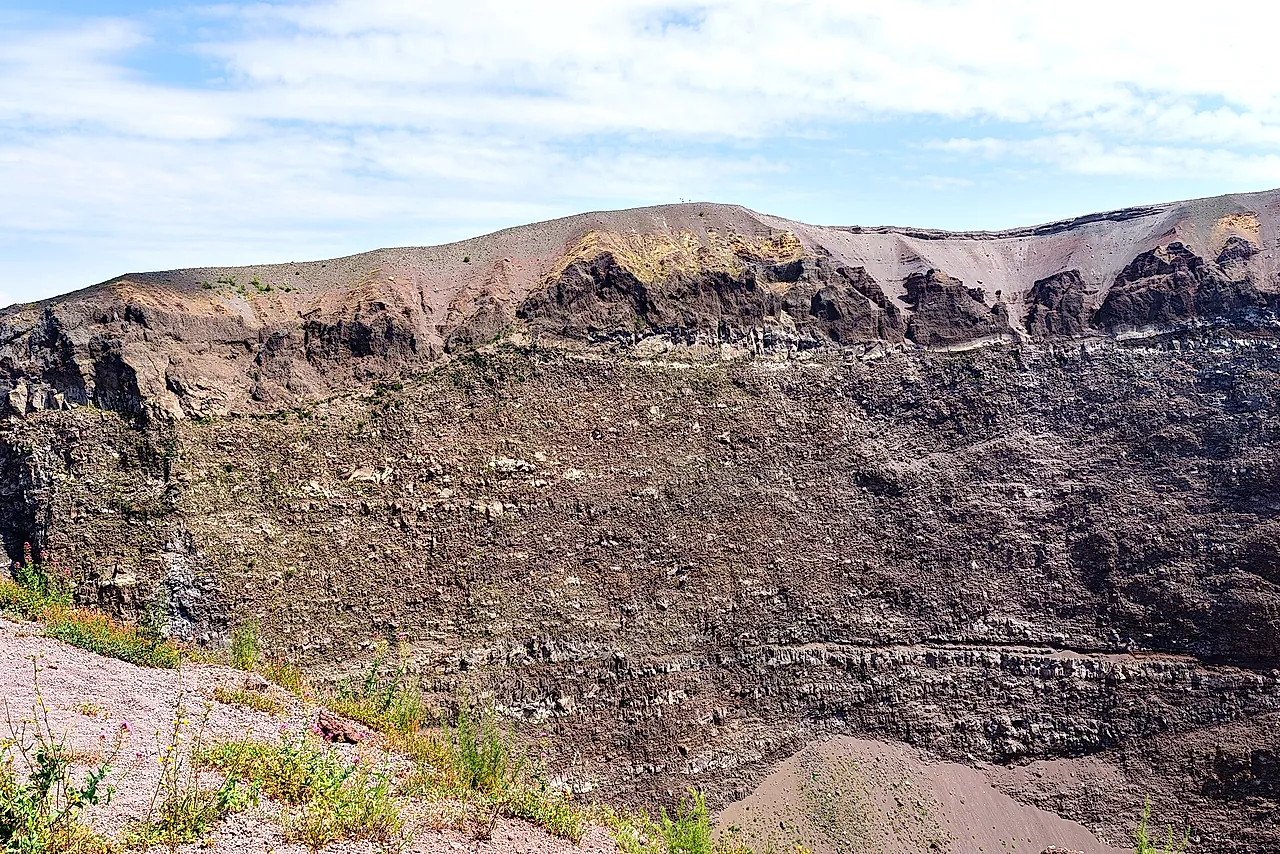
Several viewpoints along the path look into the crater, which is elliptical with a maximum diameter of 580 m, according to the Park. A few fumaroles give the feeling of a volcano that is still active, although it is quiescent.
The upper path on the summit, on the northern and eastern sides, is closed to visitors for reasons of safety and environmental protection and is open only to people authorised by the Park, so you do not walk on the rim. The path goes as far as the Capannuccia, at 1,170 m.
The view over the Gulf
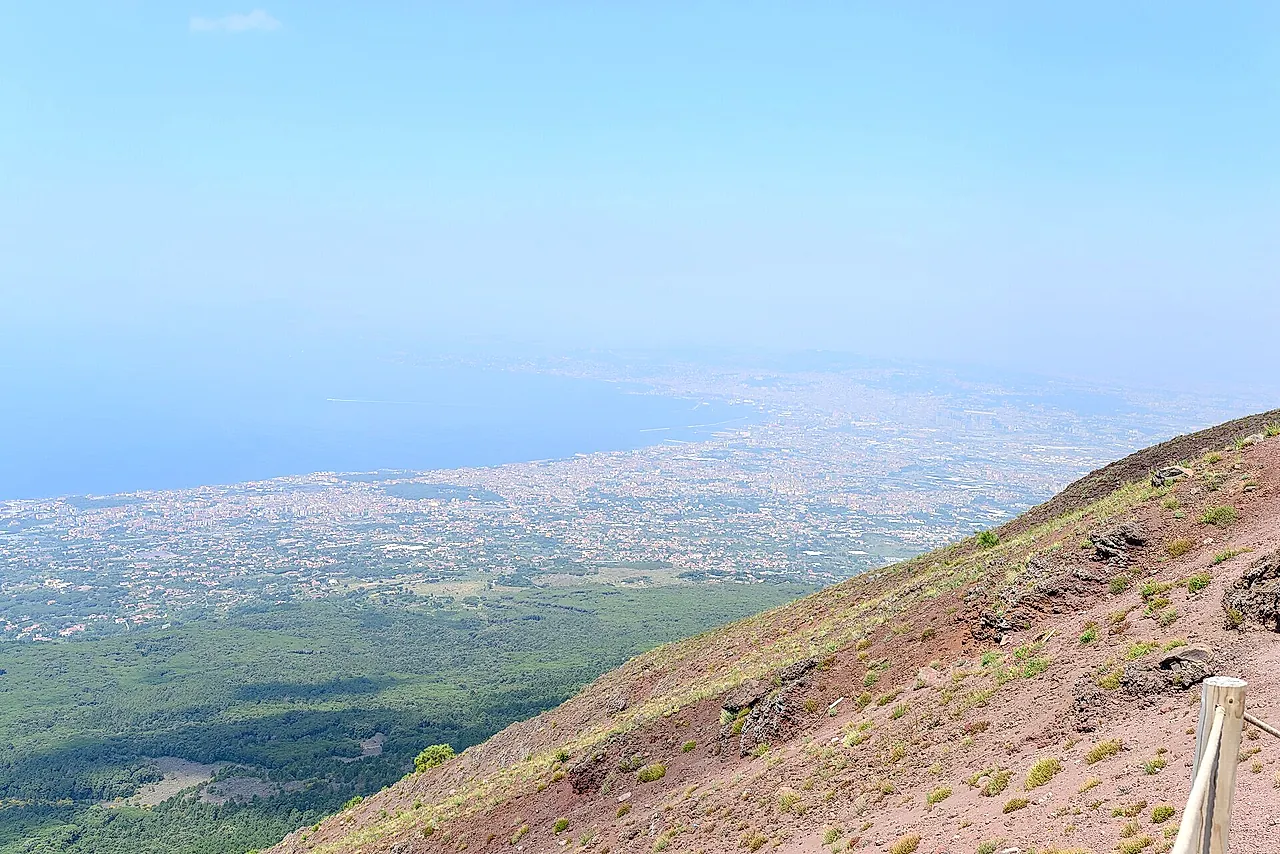
The Park describes a panorama of the Gulf of Naples and the city. On clear days you see the Campanian plain, to the north the plain of the Garigliano as far as Cape Circeo and, on the inland side, the Partenio, Taburno and Matese ranges. To the south the coast runs on to Sorrento and the island of Capri.
The Park's page does not name Pompeii among the things you see, so we do not promise it.
Ash, lapilli and the 1944 lava
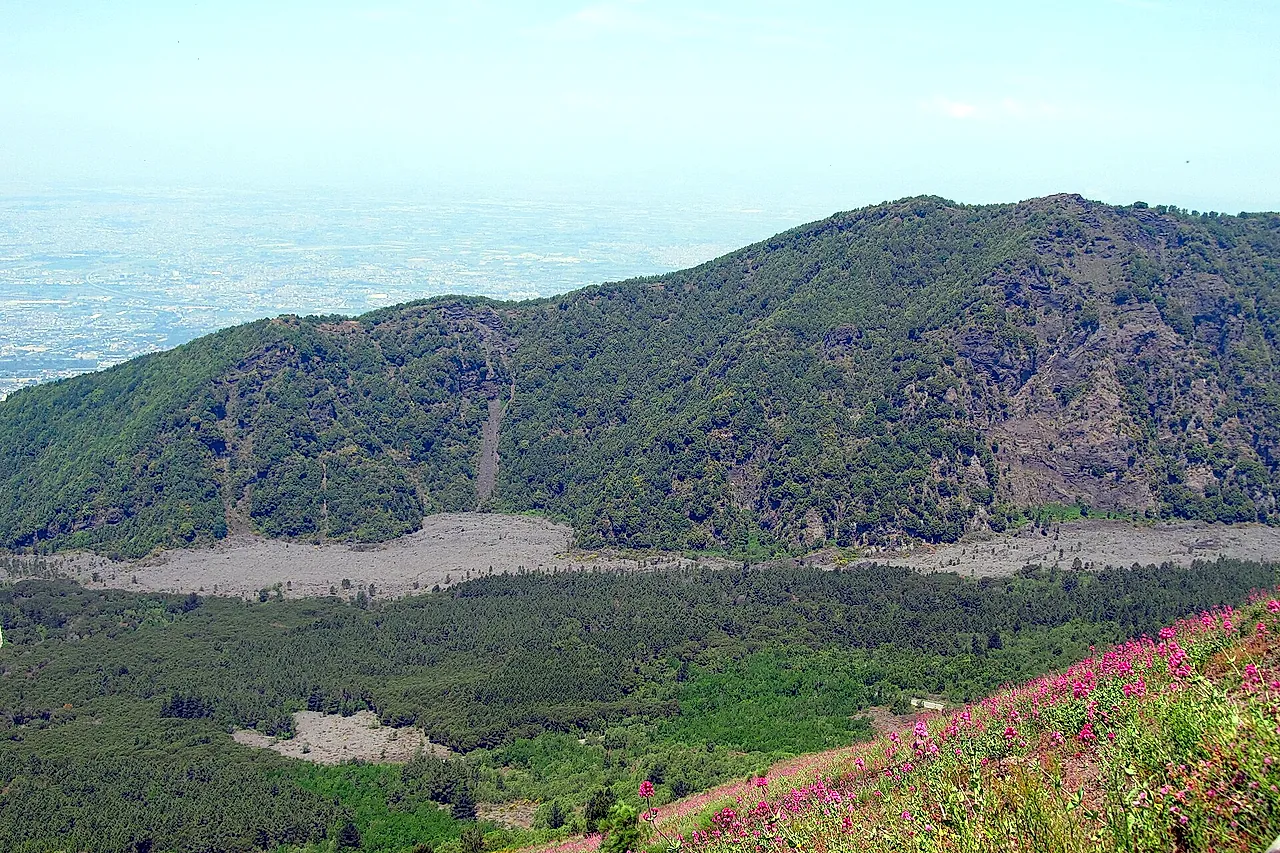
The path runs over ash and lapilli and small lava flows of 1944. The Park points out the Valle del Gigante and the Atrio del Cavallo, the lava of 1944 covered by the lichen Stereocaulon vesuvianum and the Etna broom.
The last eruption was in March 1944. In September 2026 the INGV Osservatorio Vesuviano put the alert level at green, with the volcano quiescent.
The volcano that buried Pompeii
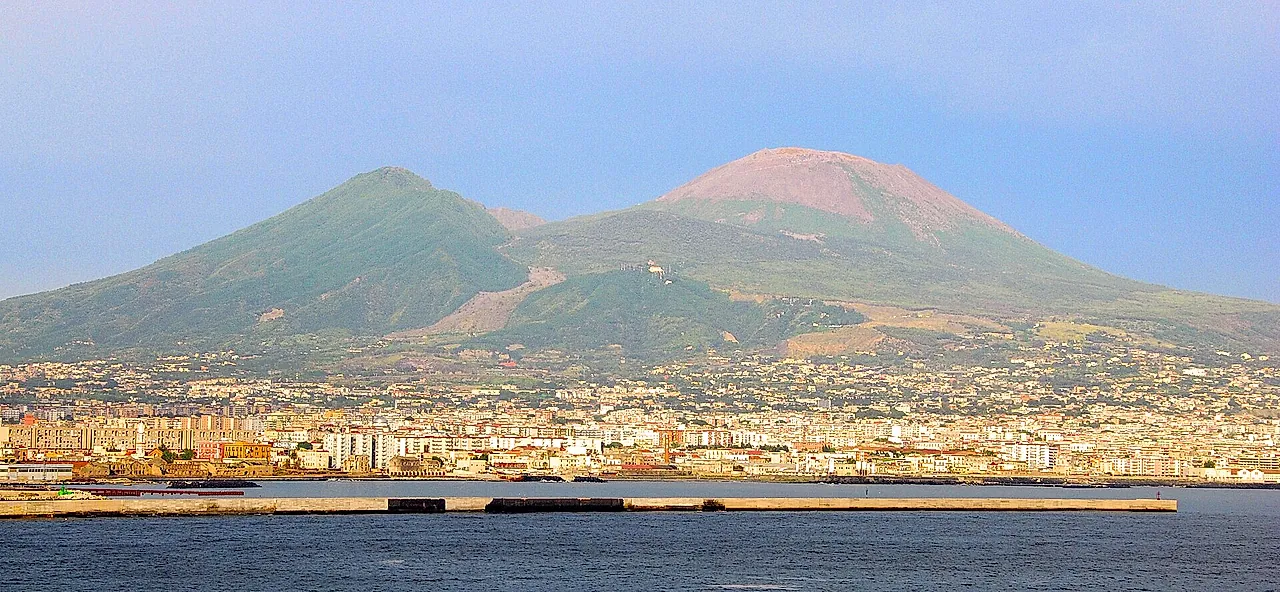
The Somma-Vesuvius complex is more than 400,000 years old. The eruption of AD 79 is the first historically dated and documented one, thanks to a letter from Pliny the Younger to Tacitus, and buried Herculaneum, Pompeii and Stabiae. The Vesuvius National Park was established in 1995 and covers 7,259 hectares in 13 municipalities.
The Vesuvian Observatory was founded in 1841 and inaugurated in 1845; the INGV calls it the oldest scientific institution dedicated to the study of volcanoes.