Pompeii · UNESCO World Heritage
Pompeii: tickets, hours and how to get there
The Roman city buried by Vesuvius in AD 79. Official prices, summer and winter hours, named tickets with time slots and the three entrances.
Today
Opening hours for every month are on the Opening hours page.
Checked against the official website on 23 October 2026 · Official source
In short
- Tickets for Pompeii are named and carry a day and a time slot, and the Park caps entries at 20,000 a day. The official prices are 20 € for the Pompei Express (ancient city only) and 25 € for Pompei+ (with the suburban villas and a shuttle); EU citizens aged 18 to 24 pay 2 €. A booking partner, a third party, sells entry tickets at 27.50 € and 27 €, plus guided tours.
- Hours: 9:00 to 19:00 with last entry at 17:30 from 16 March to 14 October, and 9:00 to 17:00 with last entry at 15:30 from 15 October to 15 March. The Park lists 25 December and 1 January as closed unless it announces otherwise; there is no weekly closing day.
- Entry is free on the first Sunday of the month, and the Park has confirmed 1 and 4 November 2026. On free days you cannot book online and there is no named ticket, but the 20,000 limit still applies. The national free days of 25 April and 2 June are not listed on the Park's pages that we read: check before you go.
- The Park says to allow at least 2 to 3 hours; its suggested routes take about 2, 3, 5 and 7 hours.
- From Naples, take the Circumvesuviana towards Sorrento to Pompei Scavi – Villa dei Misteri: one train every 30 minutes, 39 minutes from Napoli Porta Nolana. The Park has no car park for visitors.
The Forum and the Temple of Apollo
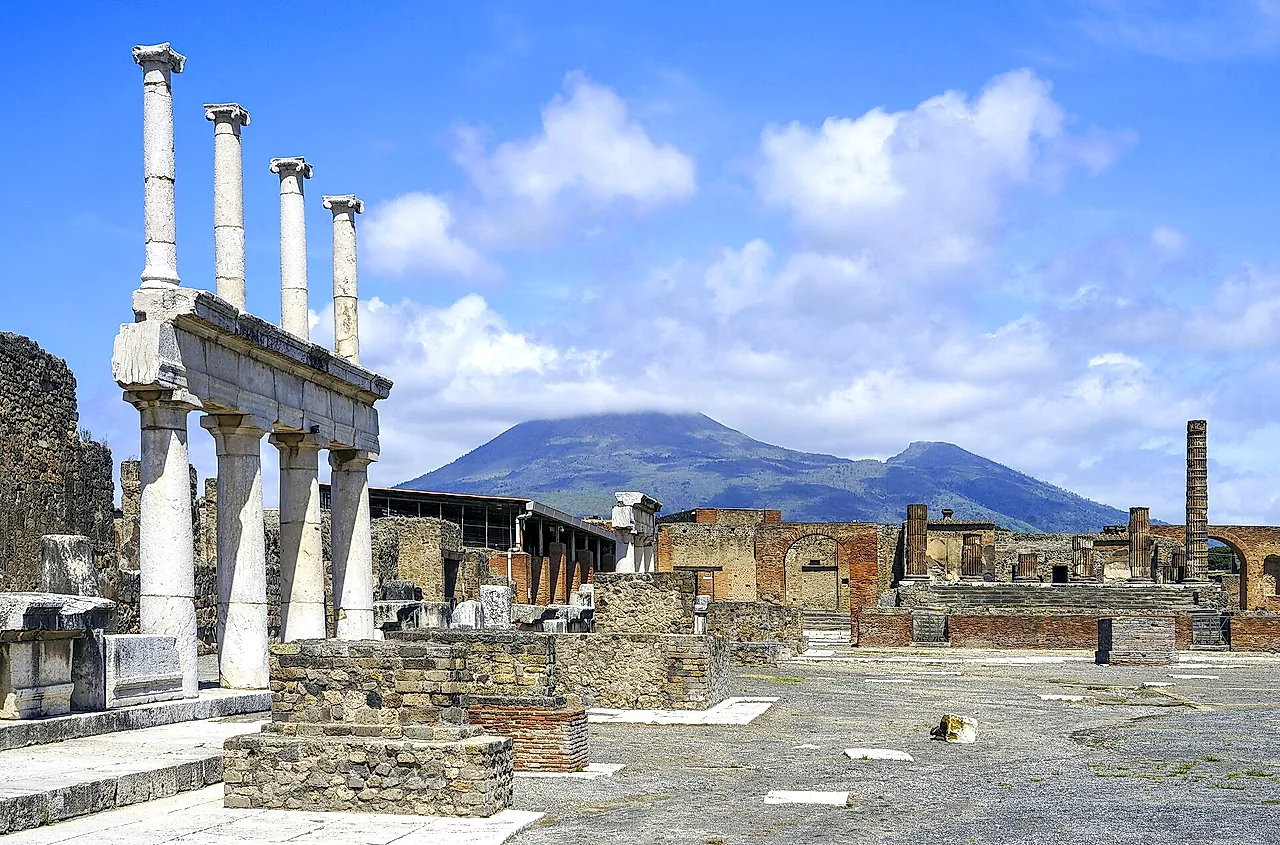
The Forum was the square of public life, with the city's main civic, commercial and religious buildings, and the Temple of Jupiter stands in line with Vesuvius. The Sanctuary of Apollo is one of the oldest places of worship in Pompeii: it has archaic phases from the 6th century BC and was renewed between the 3rd and 2nd centuries BC.
The Forum Baths, built after Sulla's colony, keep the changing room, the frigidarium, the calidarium and terracotta telamones. On the Park's list of visitable buildings, read on 23 October 2026, the Forum, the Temple of Apollo and the Forum Baths (men's section) were open.
Streets, baths and the thermopolium
Via dell'Abbondanza is the main street lined with shops and houses. The Stabian Baths have a courtyard, a pool, men's and women's sections and a heating system with pipes and double floors; as of 23 October 2026 room AMB. 1b has been closed since 19 October and the exit onto Via dell'Abbondanza cannot be used, so you leave by Via Stabiana.
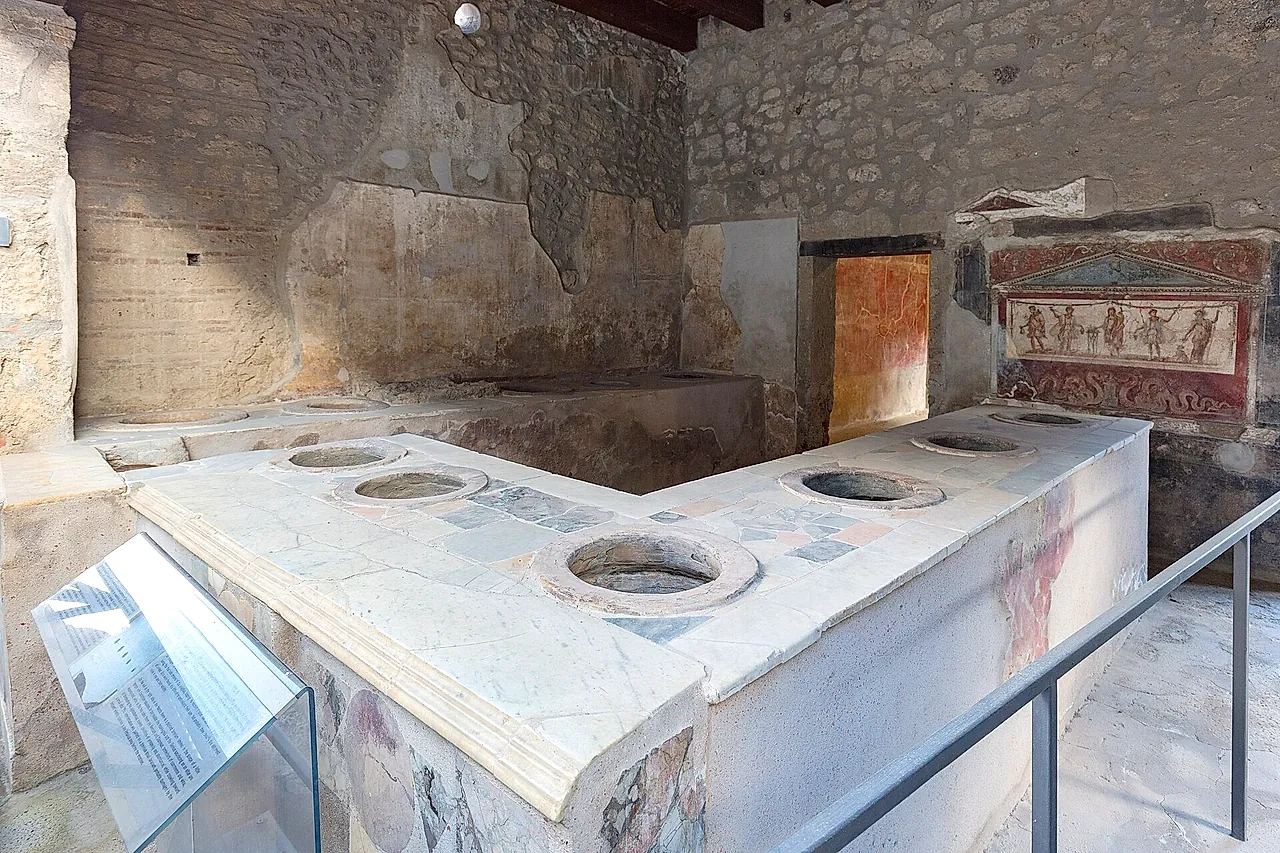
The thermopolium of Vetutius Placidus, on Via dell'Abbondanza, has a counter and a household shrine; the official list shows it as visible from the outside only. The Lupanar, a two-storey building with five rooms with masonry beds, was open on the same list (excavated in 1862).
The houses of the wealthy
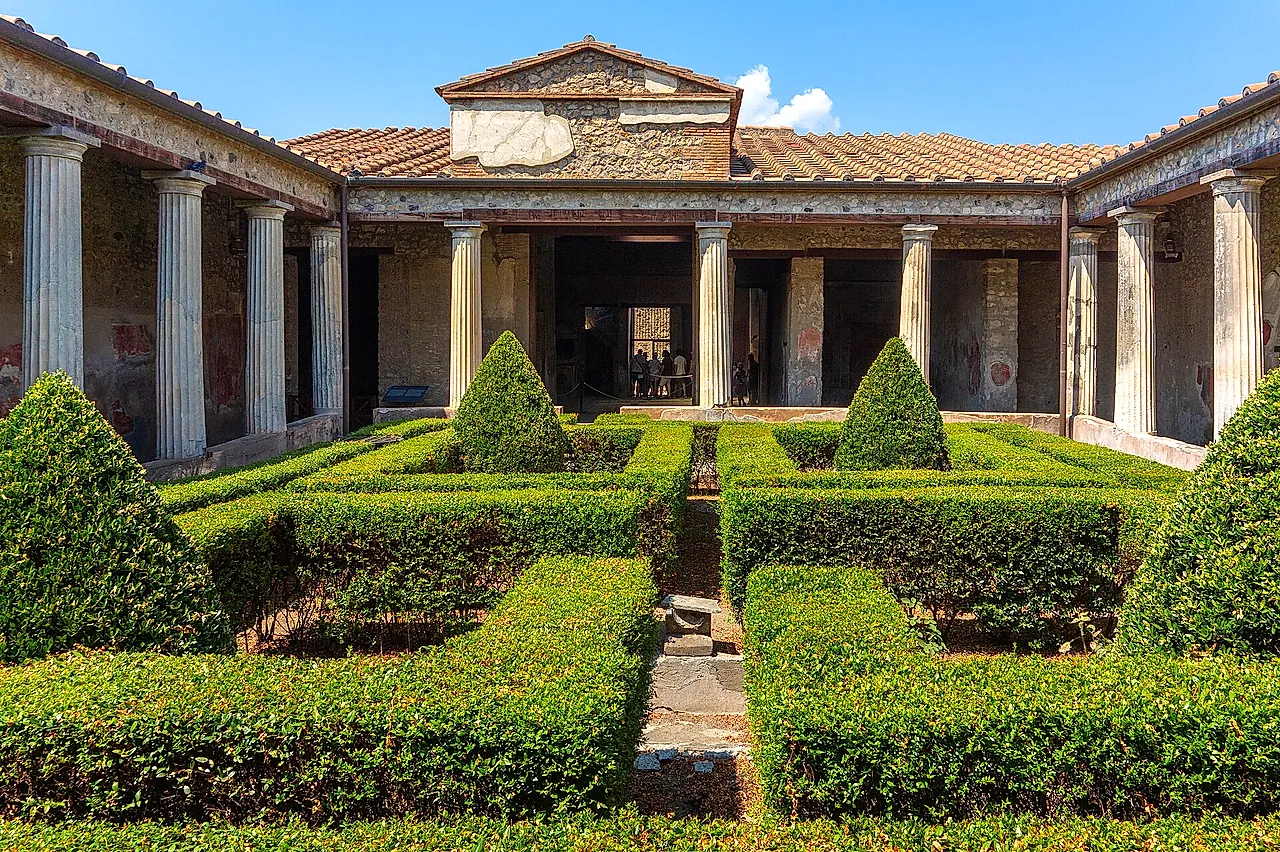
The House of the Faun covers about 3,000 m² with two atria and two peristyles, and has the greeting HAVE on the pavement outside. The House of the Vettii belonged to two brothers, both enriched freedmen, and has a garden with statues and a hall with a frieze of cupids. The House of the Menander has scenes from the Iliad and the Odyssey, a bath quarter and a silver treasure that is now in Naples.
The House of the Tragic Poet has the CAVE CANEM mosaic at its entrance; the originals of its mosaics and paintings are in the National Archaeological Museum of Naples. The houses open in rotation: check the Park's list of visitable buildings.
The Villa of the Mysteries
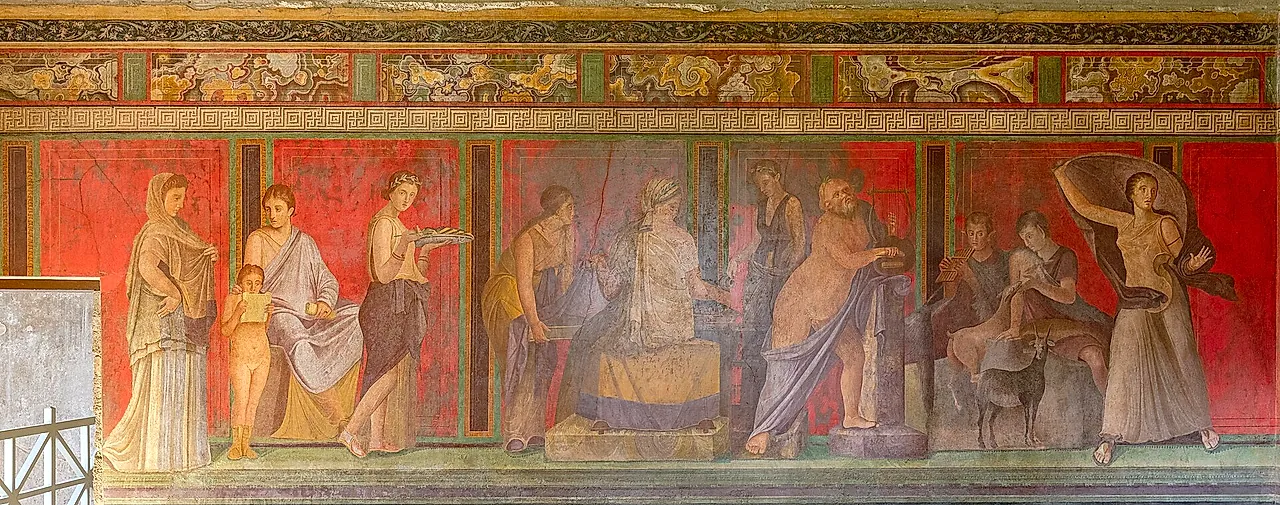
The villa has a large continuous frieze of a Dionysiac rite, among the best-preserved ancient paintings. It lies on the suburban villas route, so you can visit it only with the Pompei+ ticket or with the 8 € add-on for Pompei Express holders.
On the Park's winter list it was open from 9:15 to 16:30, with last access at 16:15.
The theatres and the Amphitheatre
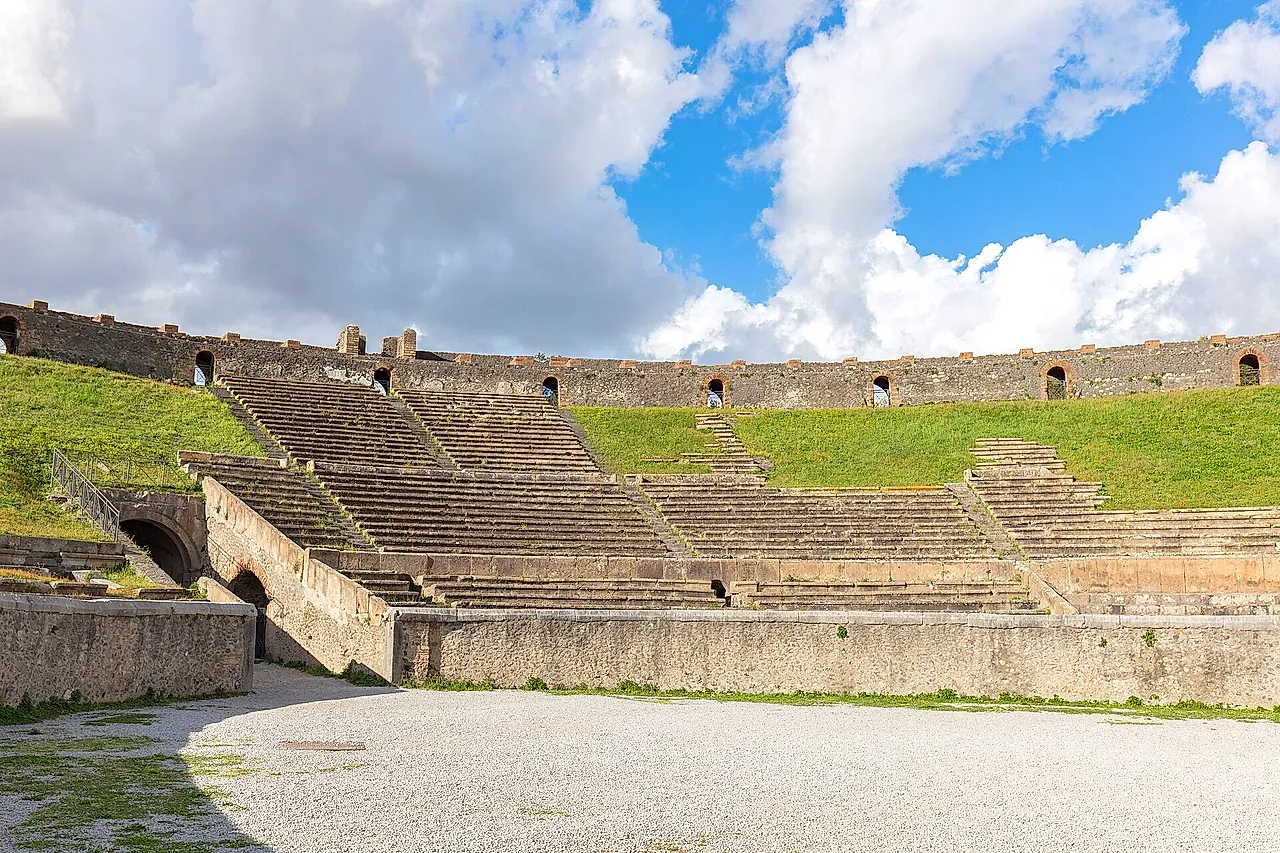
The Large Theatre was built in the middle of the 2nd century BC using the natural slope and restored under Augustus by the architect Marcus Artorius Primus. The Park announced that it reopened to the public on 14 October 2026 from 13:00. The small theatre, the Odeion, is visible from the outside only.
The Amphitheatre (70 BC) is the oldest known Roman amphitheatre and held up to 20,000 spectators. The Park's list carries an ambiguous note about access since 14 June, so we could not confirm whether you can enter.
The Garden of the Fugitives and the casts
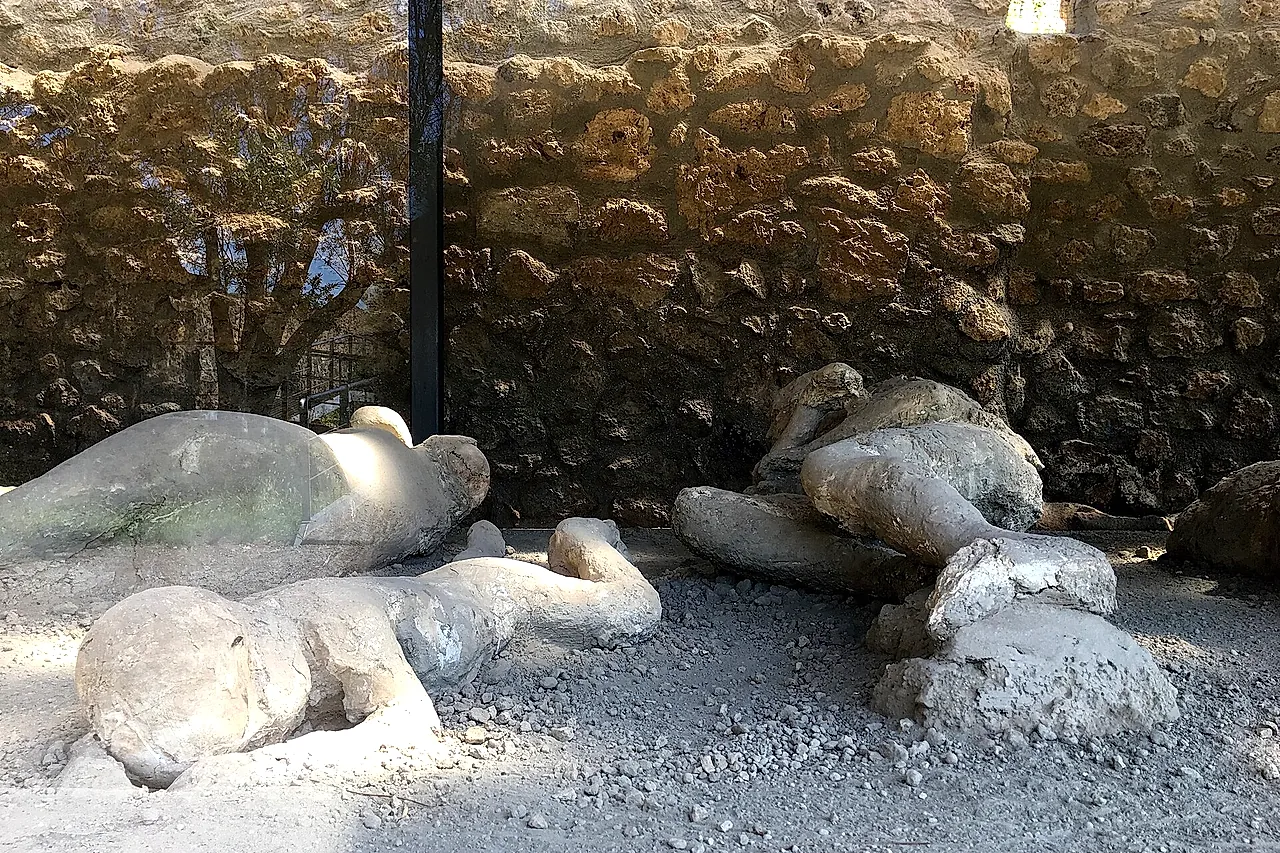
The Garden of the Fugitives is a former vineyard where 13 victims were found, excavated in 1961-62 and 1973-74. The cast of a family group is kept in a case. More casts are in the north arm of the Large Palaestra and in the Antiquarium.
The technique goes back to Giuseppe Fiorelli in 1863, who poured liquid plaster into the voids left by the bodies in the ash.